Why Discipleship Isn’t Happening in the Church
We have people—especially young people—coming to faith in our churches every single week, and that should be something we celebrate. But there’s a problem just beneath the surface that most churches don’t want to address. If you stopped many of those same people a few months later and asked them a simple question—“How do you make a disciple?”—you’d likely be met with silence. Not hesitation. Not even a rough answer. Silence.
It’s not because they don’t care or don’t believe. It’s because no one ever showed them how. And that’s on us.
Somewhere along the way, the church shifted from making disciples to managing activity. We’ve built systems that are very good at gathering people, keeping them engaged, and moving them through programs, but not actually equipping them to reproduce their faith. We celebrate attendance, we track numbers, and we fill calendars with events, yet none of those things guarantee that someone is growing into a disciple-maker. In many cases, what we call growth isn’t growth at all—it’s transfer. People moving from one church to another, while new believers—the very people who represent real kingdom growth—often get lost in the system. They’re welcomed, but they’re not developed. They’re included, but they’re not equipped.
This doesn’t start with programs; it starts with leadership. When pastors and church leaders focus primarily on numbers, discipleship will always become secondary. Not intentionally, but functionally. Numbers are easier to measure. Discipleship is slower, more relational, and harder to quantify. It doesn’t fit neatly into a dashboard. But when leadership begins to ask a different question—Who are we actually training to make disciples?—everything begins to change.
That change requires commitment—ongoing, intentional, recurring training that includes the entire ministry team, starting with the senior pastor. You lead from the front. If leadership is too busy to be trained, then the church will always be too busy to make disciples. Discipleship will never outpace the priorities of leadership, and when leaders are actively growing, modeling, and mentoring, the culture of the church begins to shift. The message from the pulpit becomes more than teaching—it becomes direction that people can actually follow.
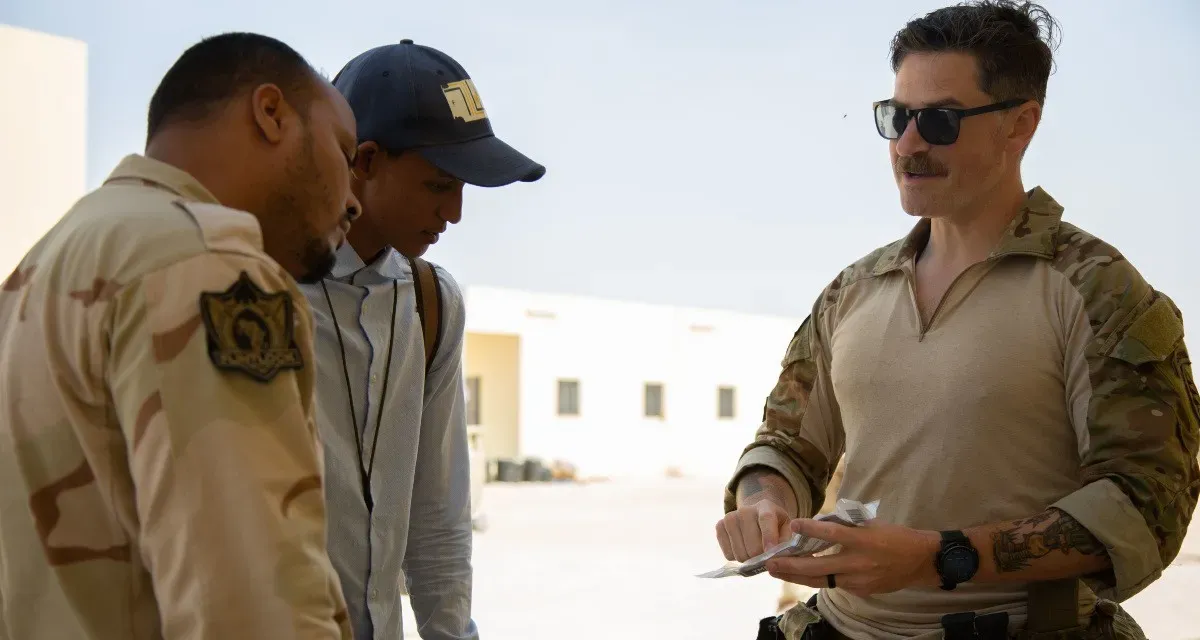
But that leadership has to be grounded in reality. Pastors and leaders must step outside the building and understand where their people live, where they work, what pressures they face, and what their daily lives actually look like. Without that, discipleship becomes disconnected—something that sounds right on Sunday but doesn’t translate on Monday. In environments like United States Army Special Forces, effectiveness comes from understanding the culture you’re operating in. The same is true for the church. You cannot disciple people well from a distance or from a protected bubble.
At the same time, we’re trying to disciple people in a world where attention is fragmented and life is full. It’s easy to point at younger generations, but the reality is that this affects all of us. The answer isn’t more content or longer explanations. The answer is engagement. People grow when they are involved, when they are doing, and when someone is walking alongside them. That’s why models like “hip pocket training,” seen in places like United States Army Ranger School, are so effective. You’re not measured by what you know—you’re measured by what you can do.
Discipleship works the same way.
But we also have to be careful not to overcorrect. The church does not need to become another place of testing, certification, or evaluation. Most people already live in that world. They are in school, have been through school, or are maintaining certifications just to keep up with life. The last thing they need is to walk into church and feel like they are being graded again.
Discipleship was never meant to feel like a classroom.
It was meant to feel like mentorship.
Jesus didn’t hand out exams. He walked with people. He taught, demonstrated, corrected, and encouraged. He gave responsibility, allowed failure, and stayed present through the process. That’s what made it transformative, and that’s what we need to return to—simple, intentional, relational discipleship that happens in real life.
This also means we need to take seriously who is doing the teaching. We often assume that because someone is willing to teach, they are ready to teach. In reality, teaching is a skill that has to be developed. If we want disciples to be made, we need to invest in training teachers—helping them understand the material, communicate it clearly, and guide others toward application. When teachers are confident and equipped, discipleship becomes effective. When they’re not, it becomes informational at best.
This is one of the reasons small groups often struggle. Not because community is wrong, but because we’ve treated small groups like a starting point instead of a stage of growth. We push people into environments that are more personal than they’re ready for, often led by individuals who haven’t been fully equipped. Over time, those groups can become shallow or unsustainable. The issue isn’t small groups themselves—it’s how and when we use them. People need a pathway. They need to become comfortable, then grounded, and then connected more deeply. When we reverse that order, we create friction instead of growth.
At the same time, many churches have unintentionally turned themselves into perpetual event machines, and the cost of that is becoming increasingly clear. Pastors, staff, and volunteers are burning out—not because they lack passion, but because the system demands constant output. Week after week, event after event, the expectation is to keep producing, keep planning, and keep executing. But activity is not the same as discipleship, and over time, even the most committed leaders begin to wear down.
The answer isn’t to do more. It’s to multiply.
You don’t build a healthy ministry by centralizing everything around a few people. You build it by developing others. In environments like United States Army Special Forces, small teams expand their impact by equipping others. The strength of the mission is not in how much they can carry, but in how well they can multiply. Jesus modeled the same thing. He poured into a few, and those few carried the mission forward.
That’s the model, and it’s the only way this becomes sustainable.
Which brings us back to how we measure success. Churches today have more data than ever before, and dashboards can make it look like things are working. Numbers go up. Attendance increases. Engagement looks strong. But numbers alone don’t tell the full story. Just because something is trending doesn’t mean discipleship is happening. You have to ask why. Is it a sermon series? A topic? A moment of interest?
Because real growth is not about what is attracting people—it’s about what is transforming them.
In places like United States Army Ranger School, people aren’t evaluated by what they can repeat, but by what they can execute. The church should be asking the same kind of question. Not simply how many people are showing up, but whether people are actually being prepared to live out and reproduce their faith.
Because the number that ultimately matters is not attendance—it’s transformation.
It’s whether people are growing in their faith, learning to follow Christ in their everyday lives, and becoming capable of helping someone else do the same. When that is happening, the pressure to manufacture growth begins to fade. You’re no longer trying to sustain momentum through activity alone. Growth becomes the natural result of something deeper and far more lasting.
And that’s where trust comes in.
If the church will focus on making disciples—really making them—then the outcome is no longer something we have to control. Our responsibility is to be faithful in the process, to invest in people, to train them, and to send them.
God will take care of the rest.
And when that shift happens, the church doesn’t just grow.
It multiplies.