Leadership Lessons from the Green Berets: A Needed Wake-Up Call for the Church
There’s something important to understand about the Green Berets that often gets missed. When they were first established, they didn’t fit into the traditional structure of the Army. They were unconventional, forward-thinking, and willing to operate outside the norm. They recognized early on that the battlefield was changing, and they adapted before others were ready to admit it. But what truly set them apart wasn’t just how they operated—it was how they built people.
Green Berets are not trained to be individual performers. They are trained to multiply themselves. In small Special Operations teams, there is no room for the phrase, “that’s not my job.” Every man understands the role of the others on the team—not casually, but functionally. If one person goes down, the mission does not stop. Someone else steps in, the team adapts, and the mission continues. That level of ownership creates resilience and flexibility. It builds a team that is not dependent on one individual, but strengthened by the capability of all.
This is where a critical challenge for the Church begins to emerge.
In many ministry environments, leadership becomes centralized. The pastor becomes the primary decision-maker for nearly everything. This is rarely driven by ego; more often it comes from a deep sense of responsibility and a desire to lead well. But over time, it creates a culture where people wait instead of lead, where decisions bottleneck at the top, and where the organization becomes dependent on one voice. That dependence may feel stable in the moment, but it quietly limits growth and weakens the long-term health of the church.
Scripture presents a very different picture of leadership. In Ephesians, Paul writes that leaders are given to equip the saints for the work of ministry and to build up the body of Christ. Leadership is not about doing everything—it is about equipping others to do the work God has called them to.
A leader is not meant to make every decision. A leader is meant to build people who can make decisions.
There is a clear difference between carrying everything and developing others. When a leader carries everything, they are not leading a team—they are managing dependence. But when a leader invests in people, invites input, and trusts those around them, something changes. The organization begins to grow beyond one person, and leadership becomes shared rather than centralized.
Leaders do not operate in isolation. They lean into their teams, ask questions, and draw out insight. They recognize that others bring perspectives and expertise that strengthen the outcome. The leader still makes the decision, but it is shaped by the collective strength of the team. That doesn’t weaken leadership—it strengthens it, because people don’t just follow decisions, they take ownership of them.
There is also a cultural issue that surfaces in both ministry and organizational life, often revealed in the phrase, “that’s not my job.” In high-functioning teams, that mindset cannot exist. The mission comes first, and roles exist to support it—not restrict it.
But in many churches, roles become rigid and activity replaces intentionality. Churches move from event to event, measuring success by attendance, while rarely asking whether people are actually growing. It is entirely possible to be very busy and still not be effective.
Numbers can create the appearance of growth while masking the absence of it. Much of what is often celebrated as growth is simply transfer growth—people moving from one church to another. The numbers shift, but the Kingdom does not necessarily expand.
Real growth is deeper. It is seen in transformation.
Paul describes the goal as presenting everyone mature in Christ. That kind of maturity cannot be measured by attendance alone. It is seen in people who are growing in their faith, living it out, and equipped to share it with others. In many ways, the Church should think more like a strong educational system. Success is not measured simply by how many people show up, but by what people become. People should be leaving equipped—ready to live out their faith and, as Scripture calls us, to be prepared in season and out of season to speak the truth of the Gospel.
This kind of growth requires intentional leadership and disciplined thinking.
In the military, there is a framework known as the Military Decision-Making Process. It is a structured, seven-step planning methodology used to understand situations, develop courses of action, and create clear plans. At its core, it forces leaders to slow down, assess reality, and align their actions with what matters most.
You cannot do everything, which means you must decide what matters most—and this is where many churches struggle, not from lack of mission, but from lack of prioritization.
Without that clarity, activity increases but impact does not.
When leaders begin to step back and evaluate what is actually producing growth, something begins to shift. They stop trying to carry everything. They begin to focus. They begin to empower those around them.
And you start to see the difference.
They are no longer pulled into everything. They are not consumed by small decisions or constant meetings. Instead, they are focused on vision, development, and alignment. They are not living in the weeds—they are leading above them.
There is a simple but powerful example of this. During a recent service, the audio system began cutting in and out. Instead of stopping everything or becoming frustrated, the pastor simply spoke louder and made a light comment about technology being created by imperfect people. The moment passed, the message continued, and the focus stayed exactly where it needed to be.
That is leadership.
It is knowing what matters most and refusing to be distracted by what does not.
Another important lesson comes from how leadership itself is structured within the military.
One of the greatest strengths of the U.S. military is its noncommissioned officer corps. These are the leaders responsible for training, developing, and mentoring those within the ranks. While officers set direction and communicate commander’s intent—the purpose and desired end state of the mission—it is the noncommissioned officers who carry that vision forward through training and execution.
This only works because of trust.
Officers trust that those under them will develop others, uphold standards, and execute the mission. And when that trust is present, leadership expands, ownership increases, and the mission moves forward with strength.
There is a clear parallel for the Church.
A pastor is not called to carry everything—he is called to develop those who can carry it with him. The church is made up of people who have been called and gifted by God, each with a role to play. Healthy leadership recognizes this and creates space for those gifts to be used.
This means equipping people well, aligning them with the mission, and then allowing them to lead. It means stepping back from constant control and allowing responsibility to take root.
When that doesn’t happen, something else often does. People begin to hold back. Gifts go unused. Initiative fades—not because people are unwilling, but because the environment does not invite them forward.
But when leaders trust and empower their teams, something changes. People begin to step into their calling. They grow. They take ownership. And the mission begins to expand.
There is also another layer the Church cannot afford to ignore: culture.
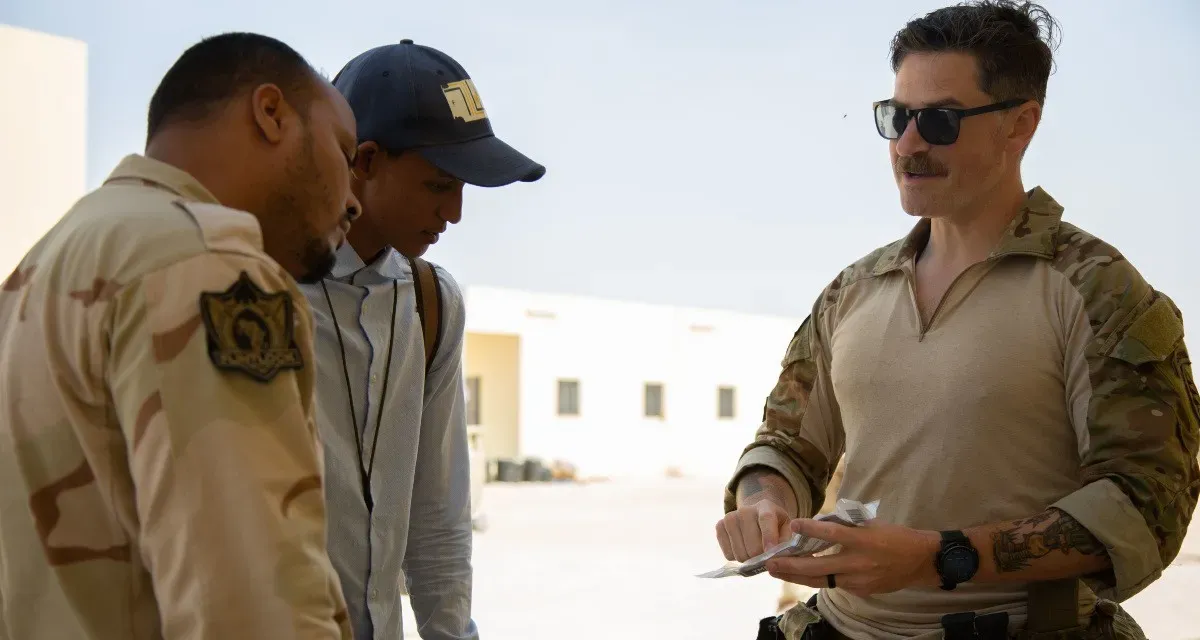
When Green Berets operate, they do not show up in dress uniforms trying to stand out. They adapt. They blend in. They learn the culture. They understand how people think and live so they can effectively work within that environment.
They do this because the mission requires it.
The same principle is seen in Scripture when Paul writes that he became all things to all people so that by all means he might reach some. He was not compromising truth—he was communicating it in a way people could understand.
Missionaries have long understood this—if you want to reach people, you must understand them.
The Church today faces that same challenge.
And that brings us to the next generation.
There is a narrative that this generation is lazy or unwilling to work hard. But that has not been my experience. I have served alongside many of them, and what I have seen is something very different. I have seen passion, commitment, and a willingness to step into something meaningful when given the opportunity.
They don’t discourage me—they challenge me to lead better.
They challenge me to be a better mentor and someone willing to invest the time to walk with them, teach them, and learn from them. As Scripture reminds us, iron sharpens iron. Growth happens when generations come together, not when one stands apart from the other.
There is hope in this generation.
We are already seeing it in movements across college campuses where young people are hungry for something real—not performance, not structure, but truth.
And that places a responsibility on those who have gone before them.
We do not leave them behind.
In the military, you never leave a comrade behind. It is not just a phrase—it is a commitment. And in the same way, the Church must lean in, invest, and walk alongside the next generation, pointing them not to systems or labels, but to the Gospel of Jesus Christ.
And now we find ourselves at a moment unlike any other in history.
We have more tools, more access, and more opportunity to take the Gospel to the nations than ever before—and yet the world has changed faster than many are willing to adapt.
Too often, we create barriers instead of removing them. We default to what is familiar instead of stepping into what is possible.
But the mission has not changed.
The environment has.
And the question is whether we are willing to adapt.
Like the Green Berets, we are called to think differently—to see not only what is, but what could be. We are called to be bold enough to move beyond what we’ve always known in order to step into what God is calling us to do.
The time is now.
Leadership is not passive. It does not stand in the back while others move forward. Leadership steps forward first. It says, “follow me.”
Jesus modeled this clearly. “Follow me,” He said—and then He led.
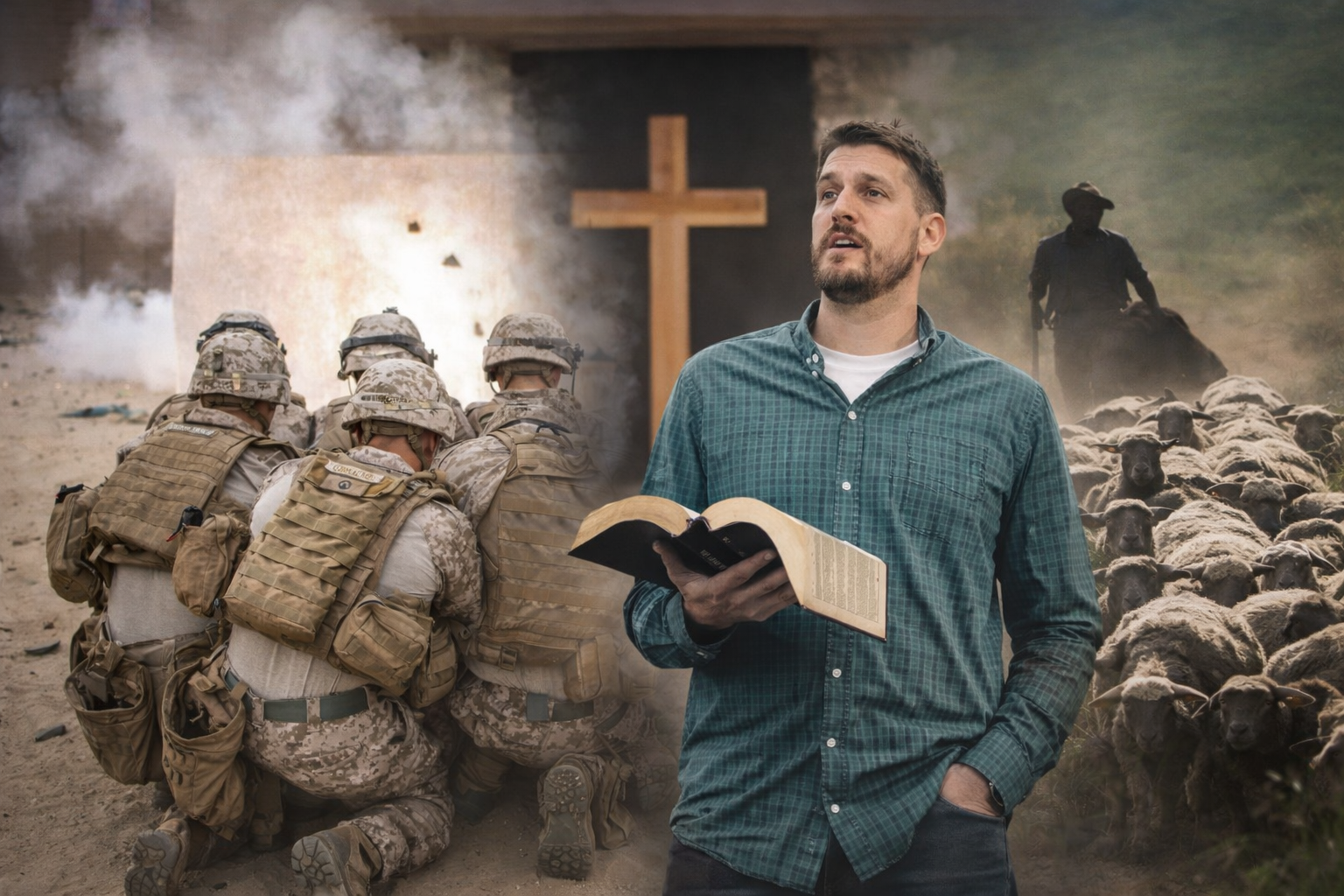
A true leader goes first. He steps over the wall first, not because everything is certain, but because the mission is clear and the people have been prepared. He leads the charge with confidence, trusting that those he has developed will carry the mission forward.
That is leadership.
And that is what the Church needs—right now.